

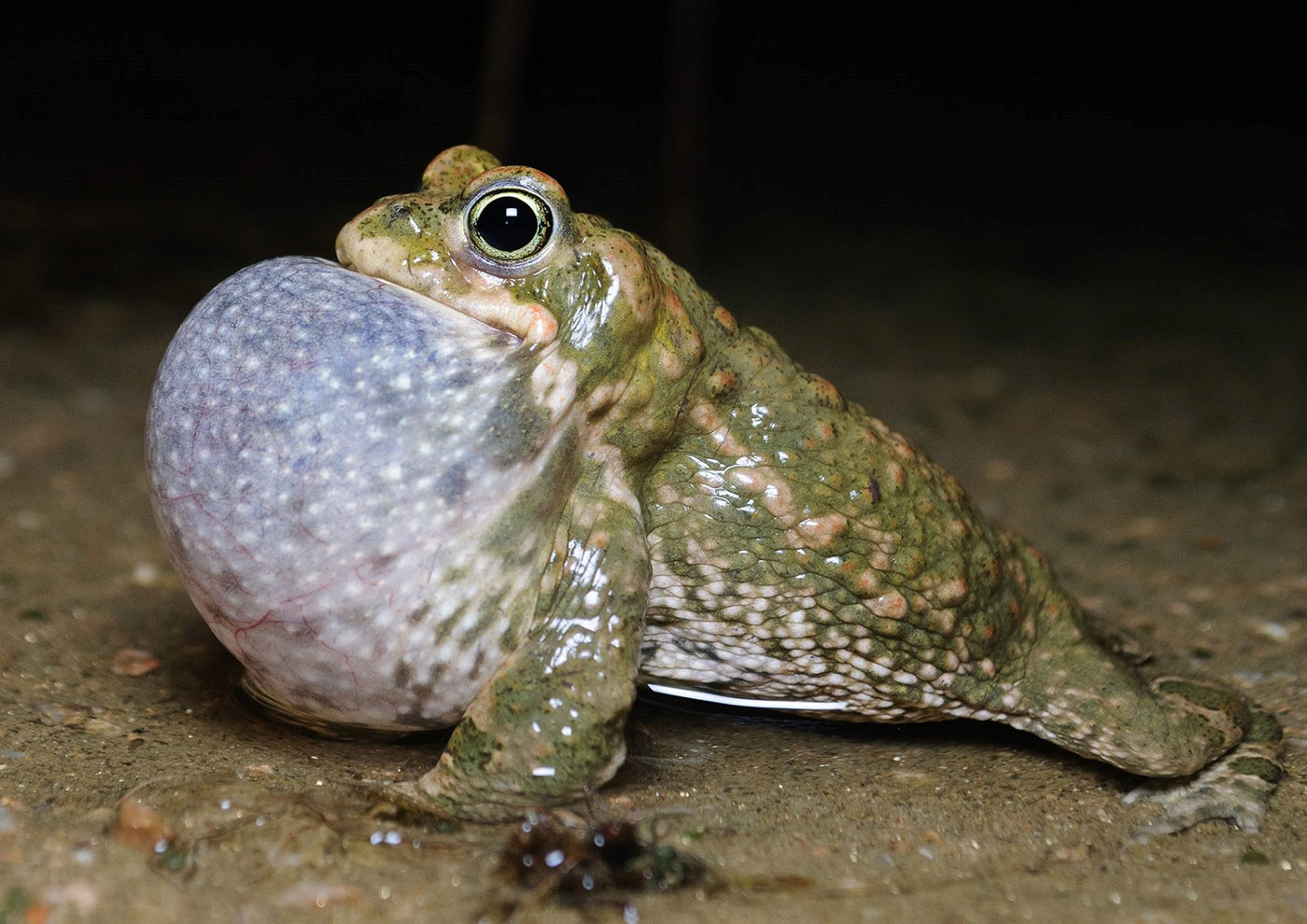
Welcome to the most visited page on the SAVE THE FROGS! website…other than our homepage! We hope you enjoy these Cool Frog Facts and share them with your students, teachers, friends, and colleagues.
How many amphibian species are there?
As of January 2021, there are 8,275 known amphibian species:
- 7,301 are anurans (frogs and toads)
- 760 are caudates (newts and salamanders)
- 214 are gymnophiones (caecilians).
The total number tends to increase over time as scientists find and describe previously unknown species.
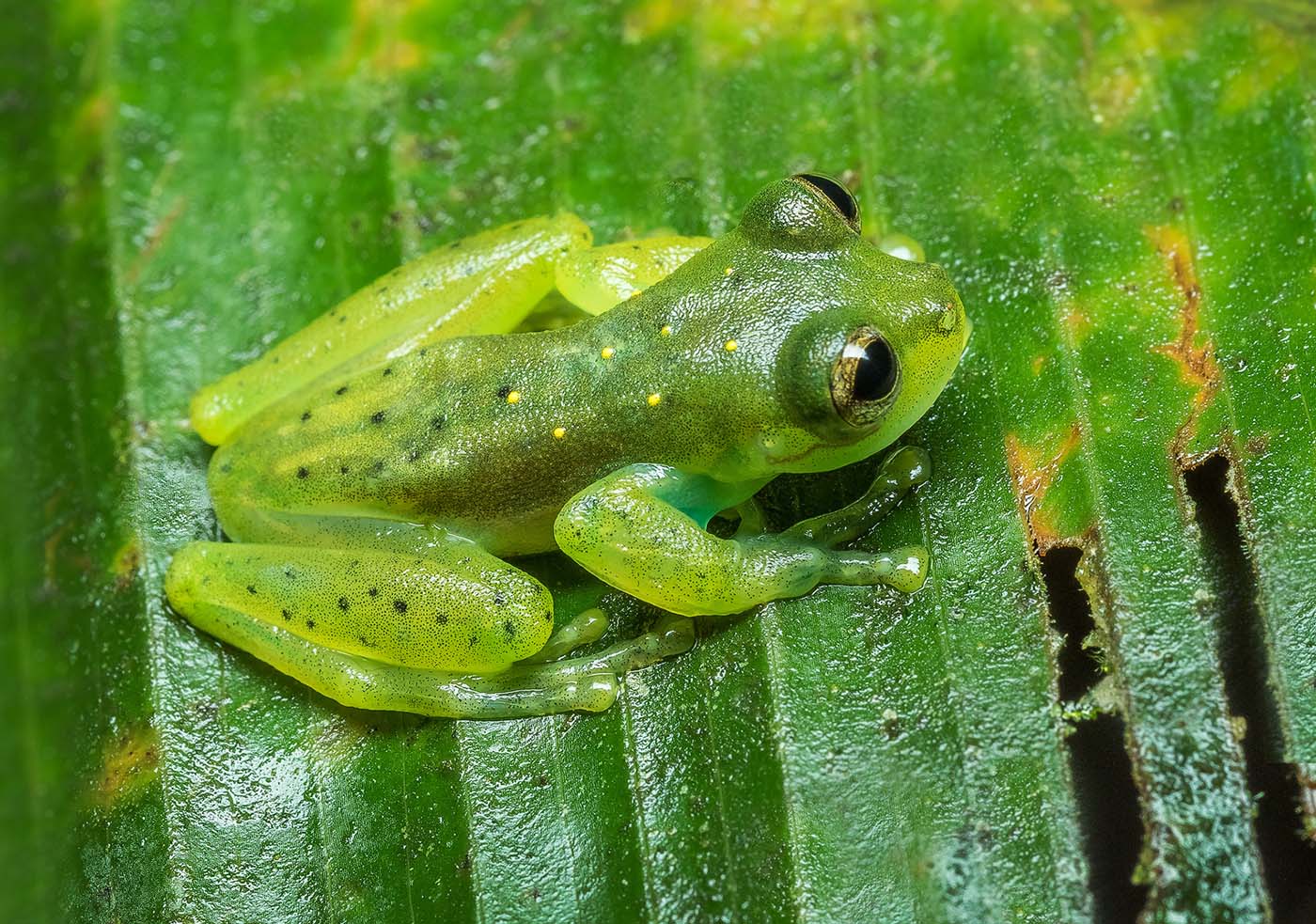
Glass Frog photo (Espadarana prosoblepon) courtesy Melvin Grey, taken during the 2017 SAVE THE FROGS! Ecuador Ecotour.
Do all amphibian species have tadpoles?
No. Some caecilians give birth to live young and some salamanders have larvae that essentially resemble the adult stage, but with external gills. There are many terrestrial frog species that emerge as froglets directly from the egg, bypassing the tadpole stage altogether. This adaptation allows them to live far from water bodies (on mountain tops for instance), and provides the parents with an increased ability to guard their eggs, which are laid on land. It also removes a serious risk that aquatic larvae must face: predation by fish or dragonfly larvae. Many terrestrial salamanders employ this strategy as well.
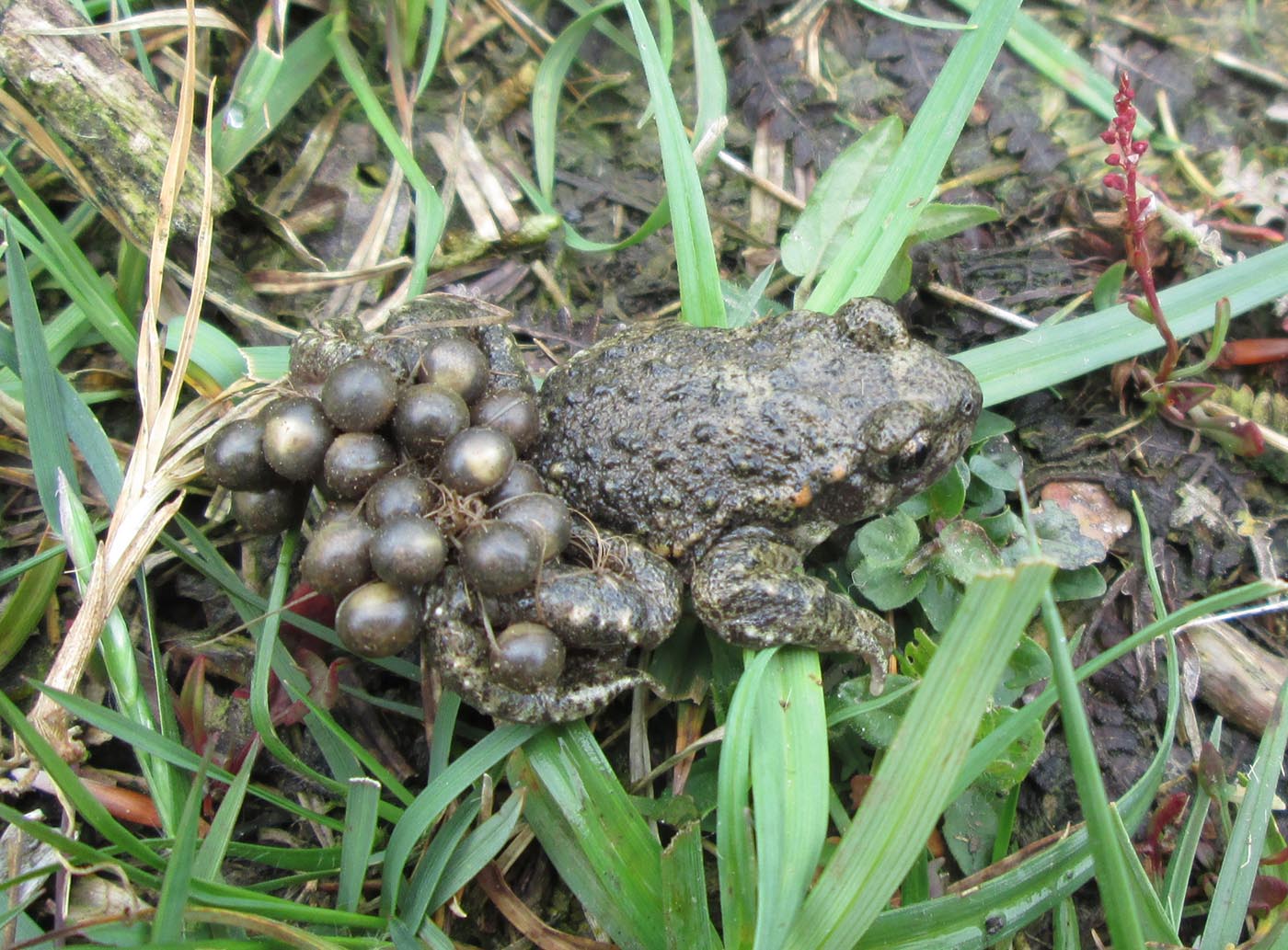
Photo of Midwife Toad (Alytes obstetricans) courtesy Anartz Garcia, Spain
How long have amphibians been around?
Amphibians are the oldest land vertebrates. Ichthyostega was an amphibian species that lived in Greenland about 363 million years ago.
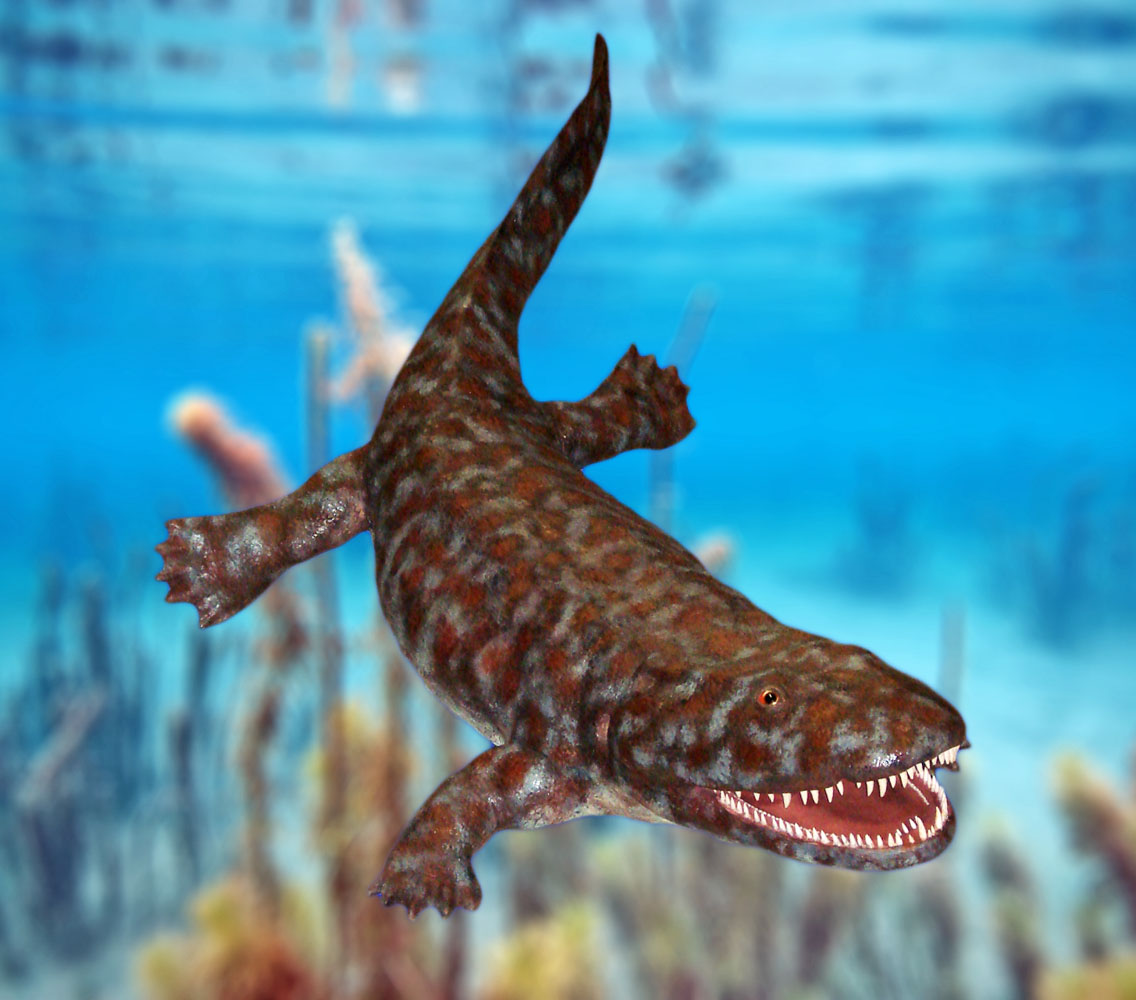
Ichthyostega model by Dr. Günter Bechly
Strawberry Poison Dart Frogs – Eggs For Breakfast?
The strawberry poison dart frog (Dendrobates pumilio), has an extraordinary reproductive strategy. Females lay their eggs in the leaf-litter or on plants. When the tadpoles hatch, they climb onto the mother’s back. She then transports them to small pockets of water in bromeliads or other vegetation, often high in the trees. She returns intermittently through their development to lay unfertilized eggs in the water. These eggs serve as the tadpoles’ primary food source. The male helps by bringing additional water to the nest and defending it. Dendrobates pumilio are found throughout the Caribbean coast of Central America. Other poison-dart frog species carry their tadpoles around as well. Note the tadpoles in the photo to the right.

Strawberry poison dart frog (Oophaga pumilio) in Costa Rica
Smallest Frogs
The smallest frog in the world is Paedophryne amauensis, from Papua New Guinea, sizing in at only 7.7 mm long on average. P. amauensis produce such a high-pitched noise that they sound can like insects, and they are one of the frog species that skip the tadpole stage, hatching right into miniature adults. They are also the smallest vertebrate on the planet!
Other Papua New Guinea species, Paedophryne dekot, Paedophryne verrucosa, and Paedophryne switorum also average 8-9 mm in length, and could easily fit on a thumbnail!
Mini mum is a recently discovered species that hails from Madagascar that grows to be 8-10 mm long.
Next up is the critically endangered Monte Iberia Dwarf Frog (Eleutherodactylus iberia). These frogs measure only 10 mm (0.4 in) when fully grown. They are threatened by pesticides, deforestation and large-scale mining operations that destroy their habitat.
Izecksohn’s Toad (Brachycephalus didactylus) from southeastern Brazil reaches full size at only 10mm (0.4 in). It is known in Brazil as “sapo-pulga” — the Flea Toad.
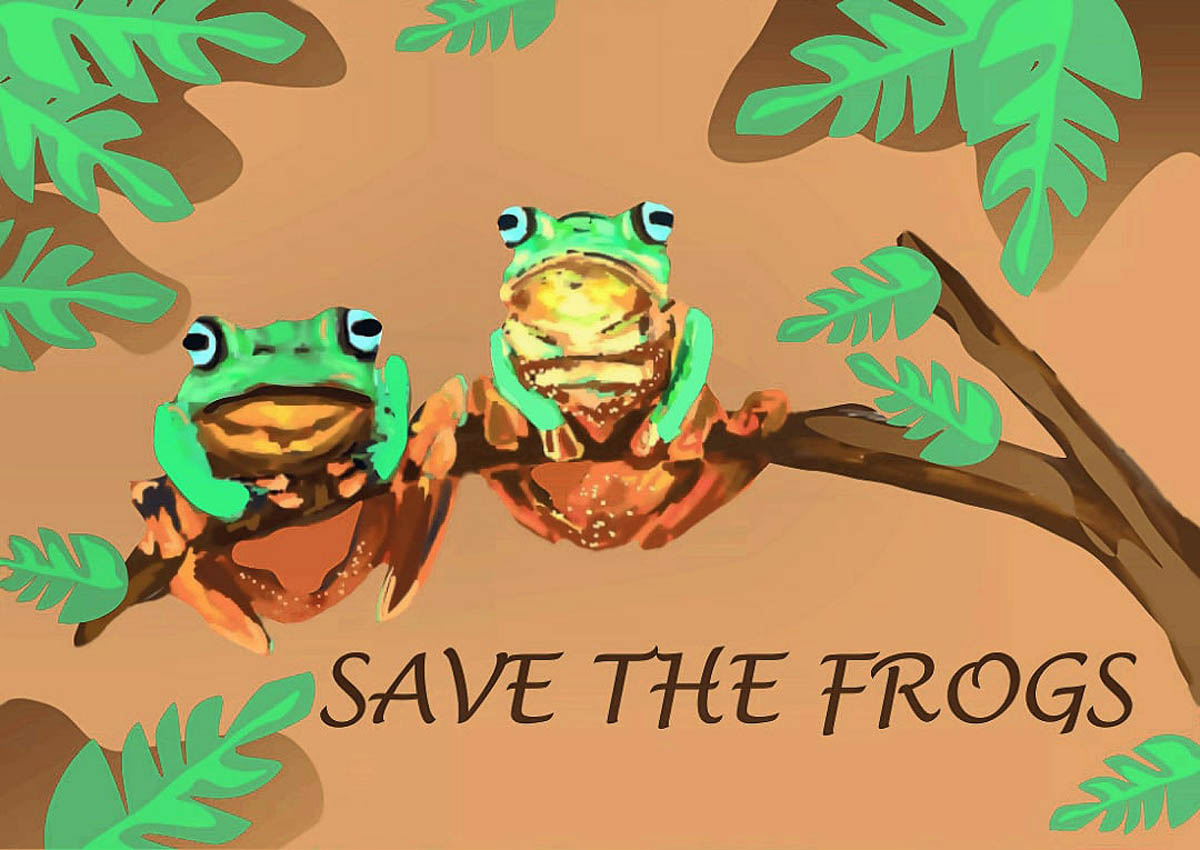
Frog art from the 2020 SAVE THE FROGS! Art Contest by Аstakhova Eugenia, Russia.
Largest Frogs
The world’s largest frog is the Goliath Frog (Conraua goliath), which lives in western Africa. They can grow to be over 30 cm (1 ft) long, and weigh over 3 kg (6.6 lbs). This species is endangered, due to the conversion of rainforests into farmland, which disrupts their habitat, and also as a result of poaching: these huge frogs are often used as food by local people.
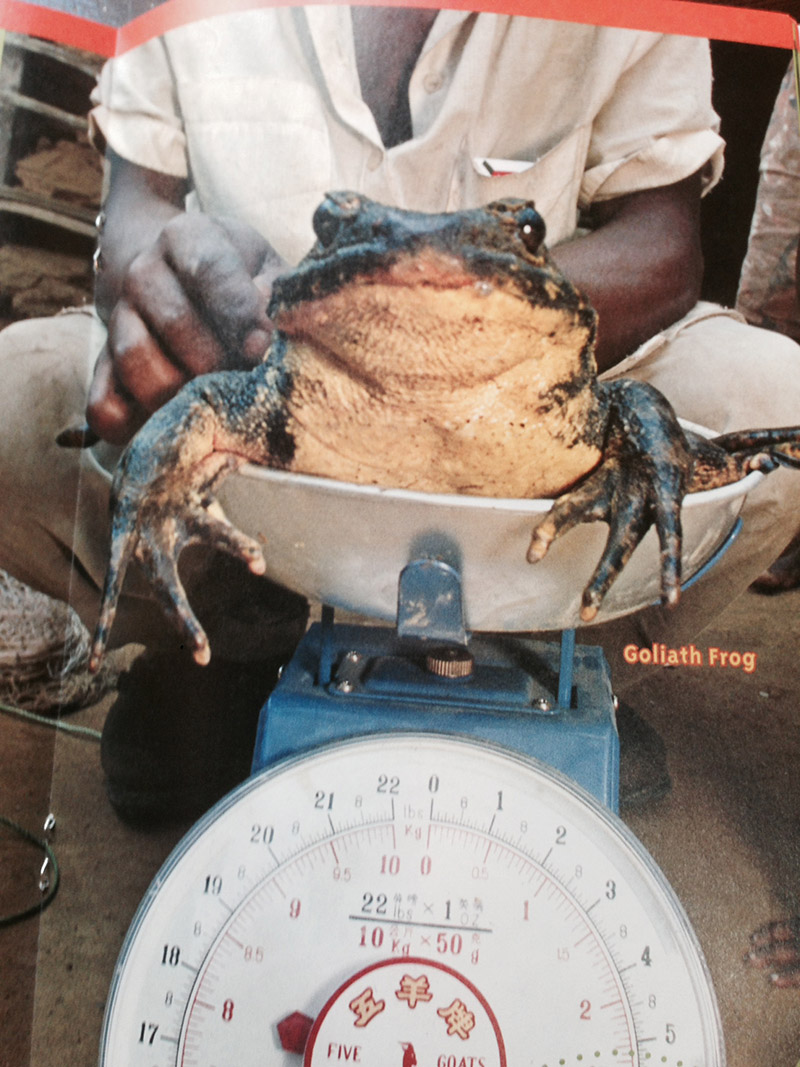
Goliath Frogs (Conraua goliath) in the market in Cameroon.
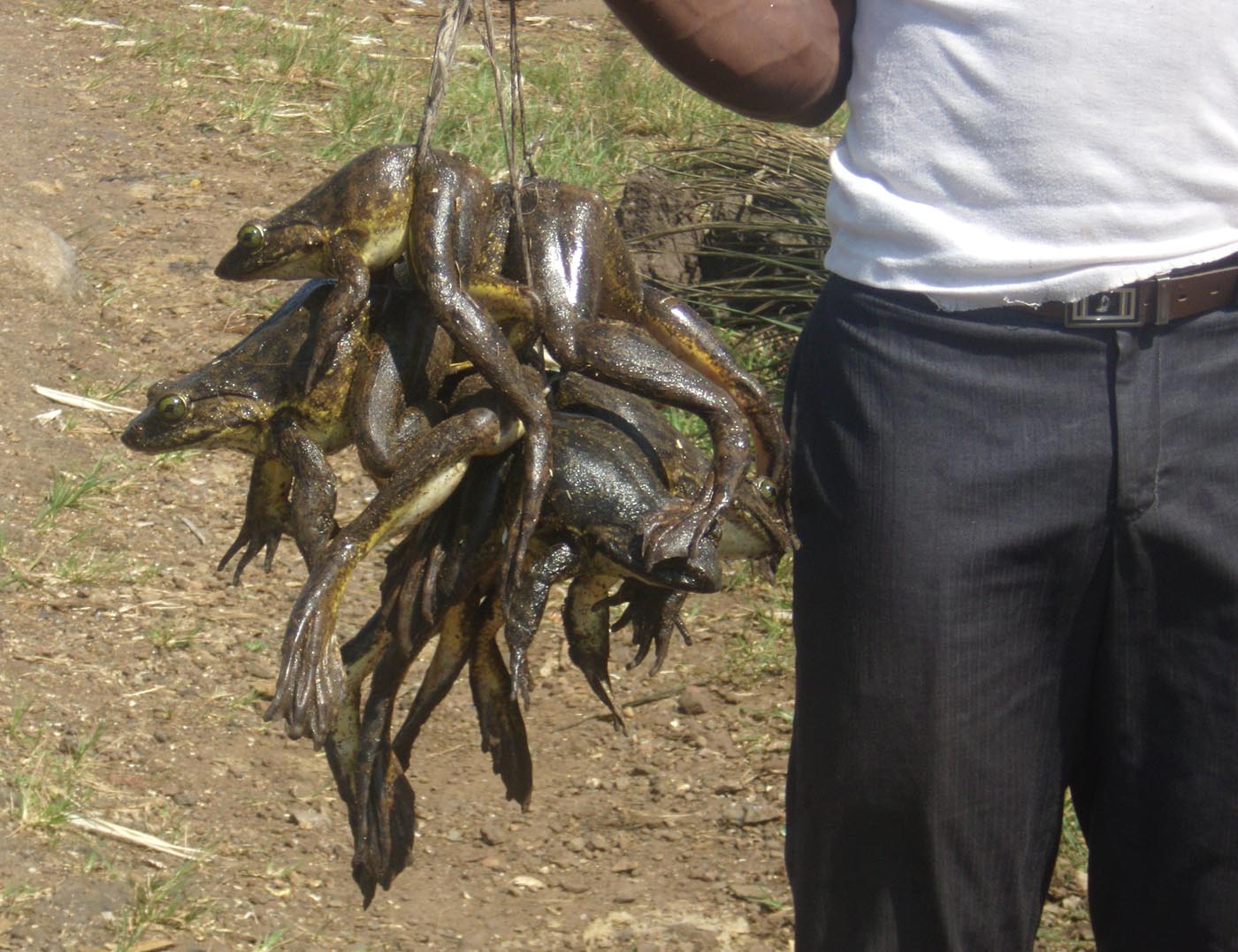
Goliath Frogs (Conraua goliath) being collected for food in Cameroon. photo courtesy Emmanuel Ndip.
What does the word “amphibian” mean?
The word amphibian is derived from seventeenth century Greek and means ‘two lives’, referring to the fact that most amphibians spend their larval stage as aquatic, herbivorous tadpole, and their adult stage as terrestrial carnivore. However, some amphibians spend virtually their entire lives in the water (e.g. African clawed frogs, Xenopus laevis, and mudpuppies, Necturus spp.). Others, like the Puerto Rican coqui (Eleutherodactylus coqui) or Dunn’s salamander (Plethodon dunni) from Oregon, spend their entire lives on land: they lay their eggs in moist leaf-litter, bypass the tadpole stage and may never enter a water body.
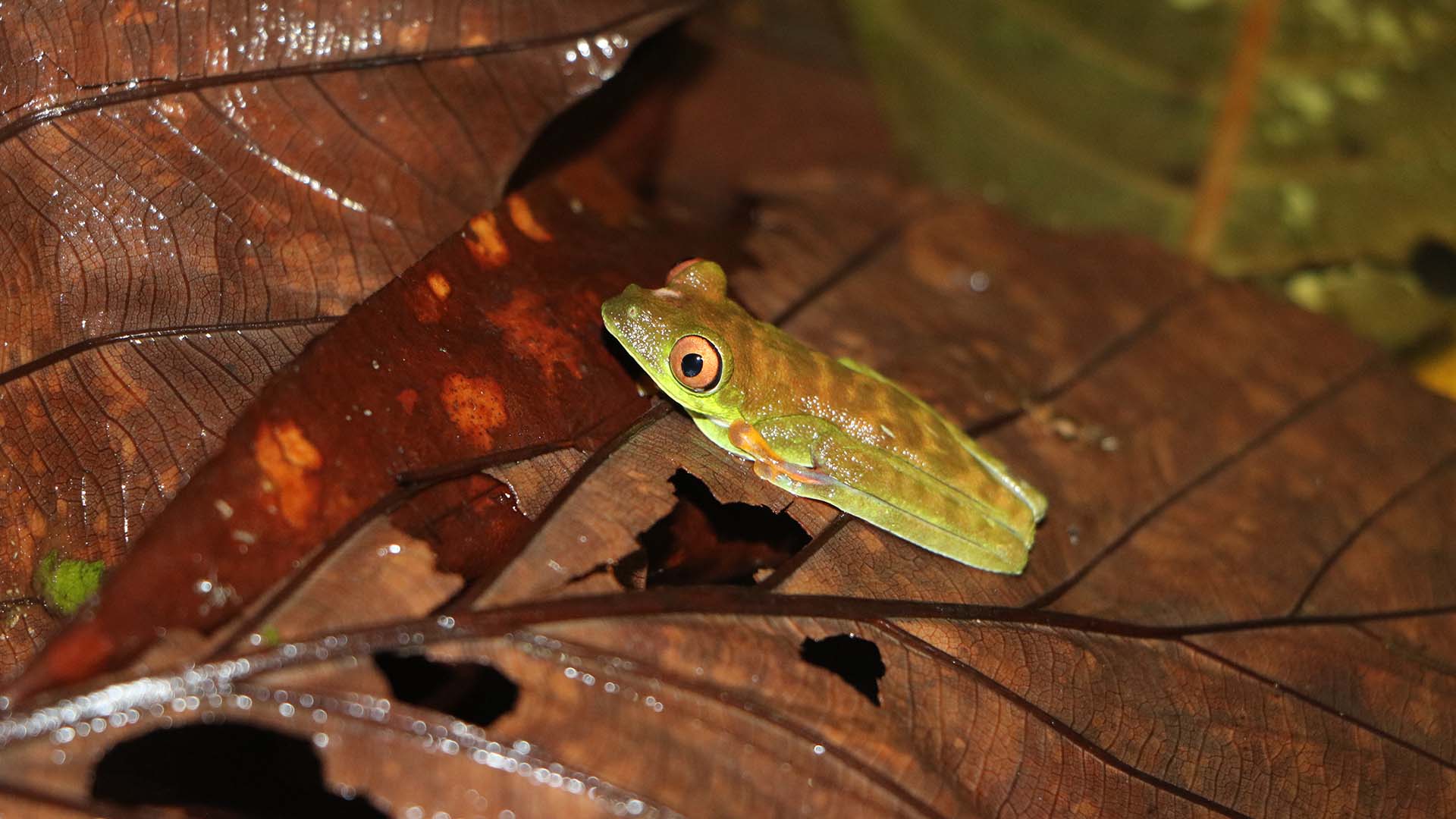
Agalychnis saltator in Costa Rica, photo by Dr. Kerry Kriger
How do amphibians breathe?
Tadpoles have gills like fish, and most adult frogs have lungs like yours. However, amphibians have permeable skin that allows them to absorb both water and oxygen directly from the environment, right through their skin. Plethodontid salamanders have no lungs: they breathe solely through their skin and through the tissues lining their mouths. The world’s first known lungless frog (Barbourula kalimantanensis), was recently found in the jungles of Borneo. The largest lungless amphibian is an 80 cm (2.5 ft) caecilian Atretochoana eiselti from Brazil.
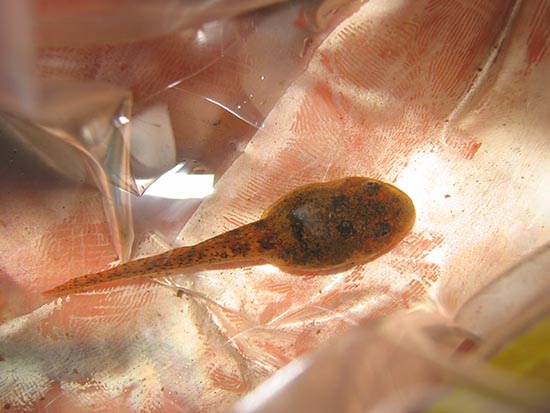
Photo of Giant Barred Frog (Mixophyes iteratus) tadpole by Dr. Kerry Kriger.
What’s the difference between a frog and a toad?
Not much. Toads are a sub-classification of frogs. True toads (bufonids) tend to have short legs and dry ‘warty’ skin, though there are plenty of frog species that fit this description as well. Generally, frogs are sleeker with moist skin and longer legs than toads. Toads tend to have toxic secretions, but so do poison dart frogs. Frogs tend to hop, while toads usually walk.
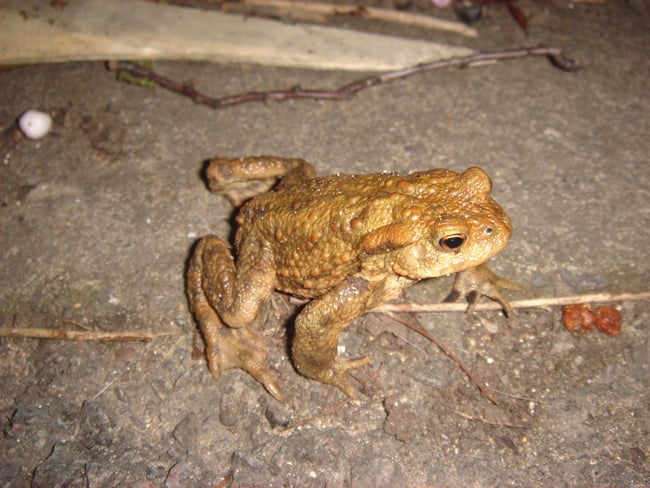
The Common Toad (Bufo bufo) in the UK. Photo by Steven Allain
You thought only birds built nests?
The Australian stony creek frogs (Litoria wilcoxii and Litoria jungguy) occasionally build a sand nest for their eggs. Thus the eggs are kept in a moist environment, safe from fish for the time being. The next large rain will wash them into a stream and they will emerge as tadpoles.
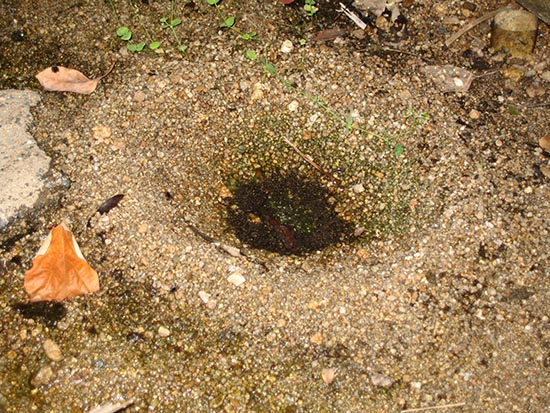
Litoria wilcoxii sand nest at Eungella National Park, Queensland, Australia
Frozen Frogs
Wood frogs (Rana sylvatica) are the only North American frog that lives above the Arctic Circle. Frogs are ectotherms (cold-blooded) meaning they cannot internally control their body temperatures. Wood frogs are adapted to cold winters being able to survive a deep freeze: Their breathing, blood flow, and heartbeat stop, and ice crystals form beneath their skin. While ice crystals in human skin would result in serious problems (frostbite), wood frogs are safe because high glycogen levels in their cells act like anti-freeze, restricting the frozen areas to the extra-cellular fluid, where no tissue damage will occur. Cool frogs!
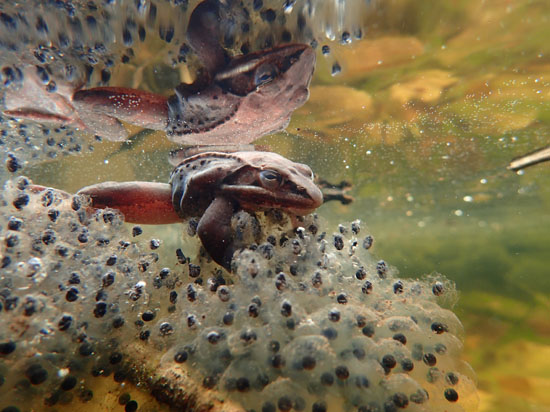
Photo of Wood Frog (Rana sylvatica) by Lindsey Swierk, 2017 SAVE THE FROGS! Photo Contest
What are the big warts behind a toad’s eyes?
Those are the paratoid glands, which hold a cocktail of toxic secretions. Since toads are pretty slow they need to defend themselves from predators. The Cane Toad (Bufo marinus) has at least 20 bufotoxins, some of which are potent enough to kill a snake many times its size. Contrary to urban legend, if you lick one, you’ll probably just throw up (but please don’t lick wildlife). The Sonoran Desert Toad (Bufo alvareus) has secretions that can cause hallucinations, and are toxic enough to kill predators as big as dogs.
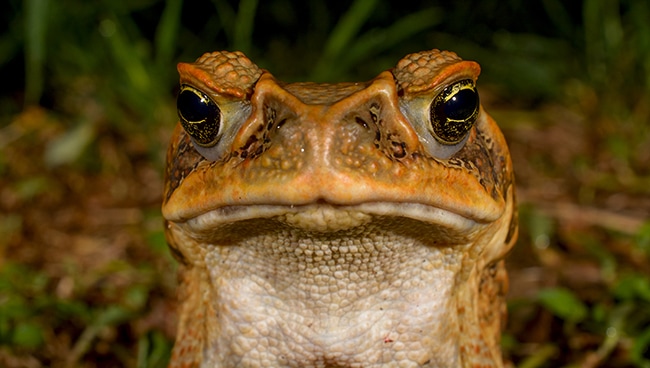
Cane toad (Rhinella marina) in Puerto Rico. Photo by Jan Zegarra, 2017 SAVE THE FROGS! Photo Contest.
Toxins
Most toxic amphibians (like cane toads or poison dart frogs) accumulate their toxins from the insects they eat. But Australia’s critically endangered Corroboree Frogs (Pseudophryne corroboree and P. pengilleyi) manufacture their own toxins. They may be the only vertebrates capable of such a feat. Learn a lot more about Australia’s frogs in this fabulous presentation.
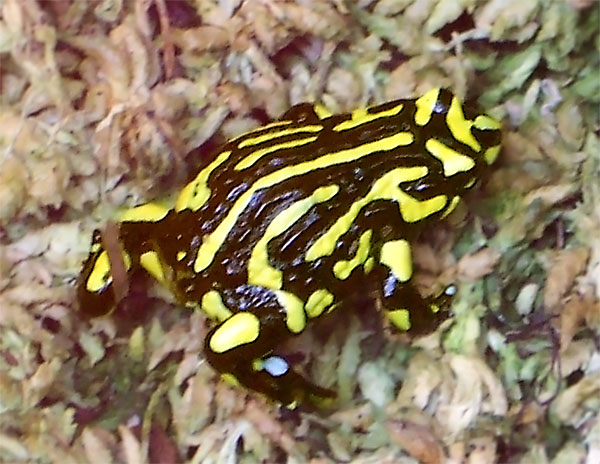
Corroboree Frog
What’s a batrachologist?
A batrachologist is a person who studies amphibians. While “batracho” has been used in science for over 150 years to denote amphibians, the term batrachologist has only come into recent usage. Formerly, the term herpetologist was used, but herpetology encompasses those who study amphibians and/or reptiles. We choose to avoid the use of the word herpetology when not referring also to reptiles, as “herpeto” originated in an era when scientists mistakenly though that amphibians and reptiles were the same.
Want to keep it really simple? Avoid all the Latin and just say “amphibian biologist”.
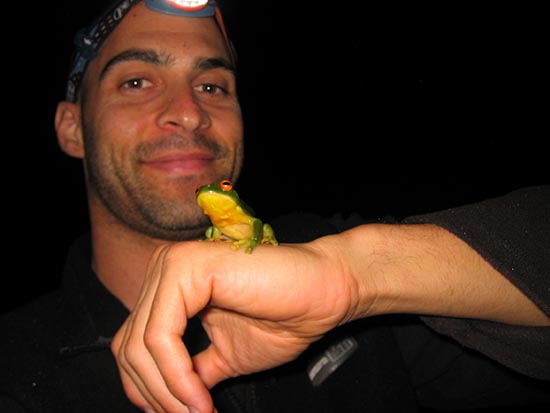
SAVE THE FROGS! Founder Dr. Kerry Kriger with a Southern Orange-Eyed Treefrog (Litoria chloris) in Queensland, Australia.
Old tadpoles
Some frogs breed in ephemeral pools that form after heavy rains. To ensure that their tadpoles do not die when their puddle dries, the tadpoles are often adapted to metamorphose quickly, perhaps within a week or two. Other frogs, however, like the Tailed Frog (Ascaphus truei) from the Pacific Northwest or Australia’s Barred Frog (Mixophyes spp.), live in permanent ponds or streams and can remain in the tadpole stage for several years.
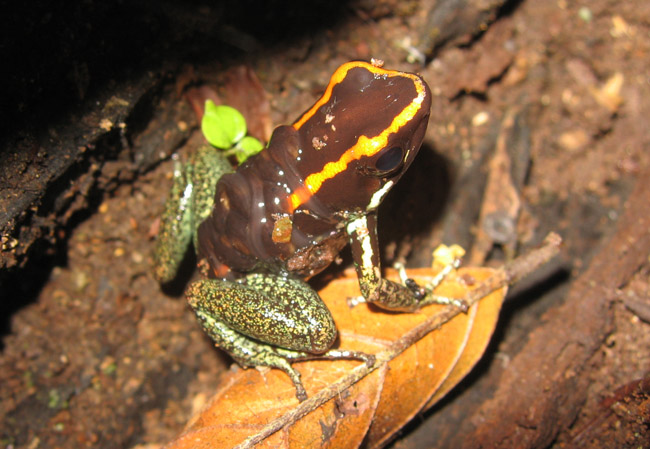
A dart frog carrying its tadpoles on its back in the Osa Peninsula, Costa Rica. Photo by Dr. Kerry Kriger
What’s up with the 6-legged frogs?
Frog deformities have caused alarm since the early 1990’s, when high numbers of frogs in the Midwest were found with missing limbs, extra limbs or other developmental abnormalities. Many of these deformations are caused by a trematode parasite (Ribeiroia ondatrae) that burrows into tadpoles’ hind limbs.
Why did the malformation rate increase so dramatically in the last two decades? This is unknown, but it may be due to increased levels of eutrophication, an un-natural state caused by excessive amounts of fertilizer entering a water body. Eutrophication leads to an increase in snails, which are an intermediary host for the trematodes, thus providing optimal breeding conditions for the parasite. Furthermore, pesticides have been shown to weaken frogs’ immune systems and make them more vulnerable to trematode infections. The photo below is a 6-legged Spotted Grass Frog (Limnodynastes tasmaniensis).
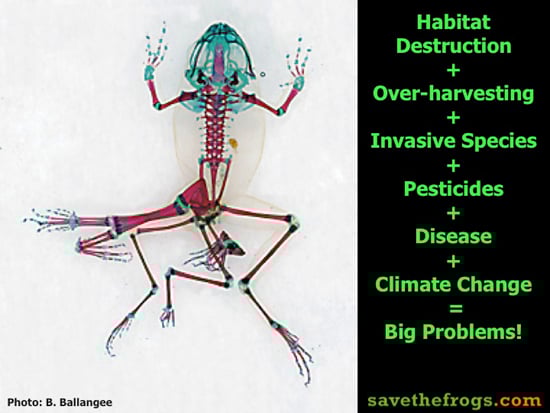
Frog deformities are kind of cool, but in a not-so-cool kind of way. Photo by Brandon Ballengee.
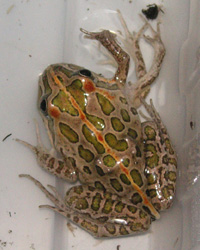
Photo is a 6-legged Limnodynastes tasmaniensis.
How long do frogs live?
Some species only live a few years, but many live 6 or 7 years. The African Clawed Frog (Xenopus laevis) and the Green Tree Frog (Litoria caerulea) can live around 20 years in captivity. Archey’s Frogs (Leiopelma archeyi) in New Zealand are known to live at least 38 years. Determining their life span in the wild is difficult, but if anybody wants to follow some frogs around for a couple decades, please let us know.
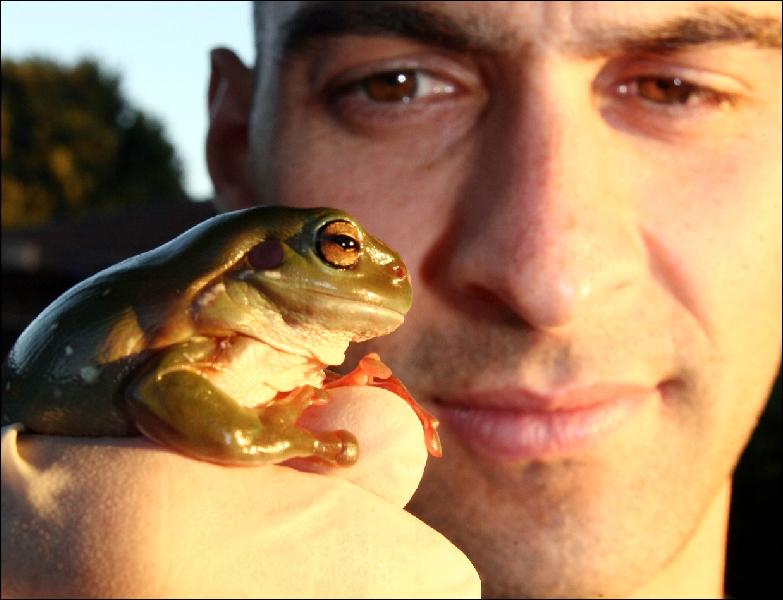
Dr. Kerry Kriger holds a Green Tree Frog (Litoria caerulea).
Burrowing Frogs
Frogs inhabit some of the driest regions on Earth. As frogs need to remain moist to survive, some frogs burrow underground to avoid the hot dry weather up above. They have specialized shovel-like pads on their arms or legs that let them to go up to 1.5 m (5 ft) down. If no rains come, that’s fine. These frogs slow down their metabolism and enter a state called aestivation, which is similar to hibernation. And they shed layers of skin that surround them like a protective cocoon to retain moisture. Some frogs remain underground for years if necessary. When the rains come, these frogs appear en masse on the surface for the biggest party of the year.
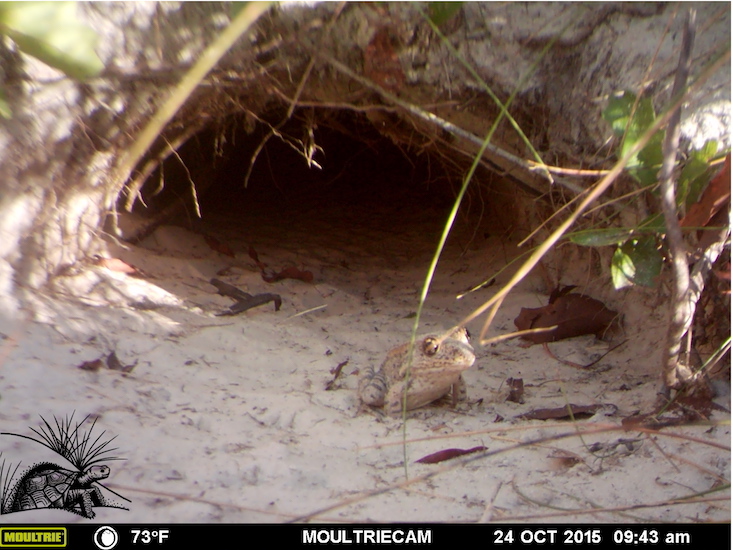
A Gopher Frog sits outside its burrow.
Nice eyes
Speaking of Barred Frogs, the eyes of Fleay’s Barred Frog (Mixophyes fleayi) actually change color as they get older. Juveniles have partially red eyes, but in adults, the top half of the eyes is silver-blue and the bottom half is brown.
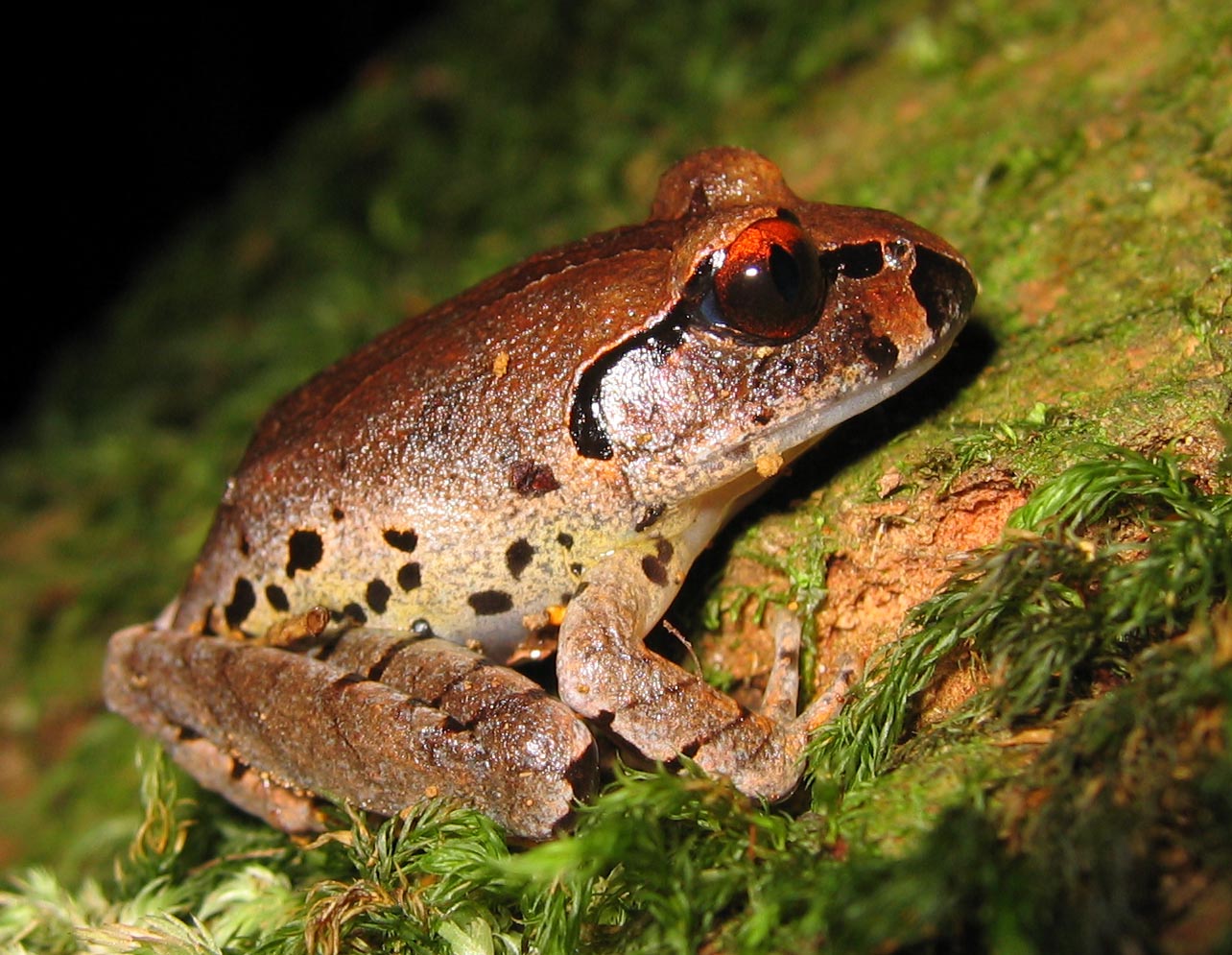
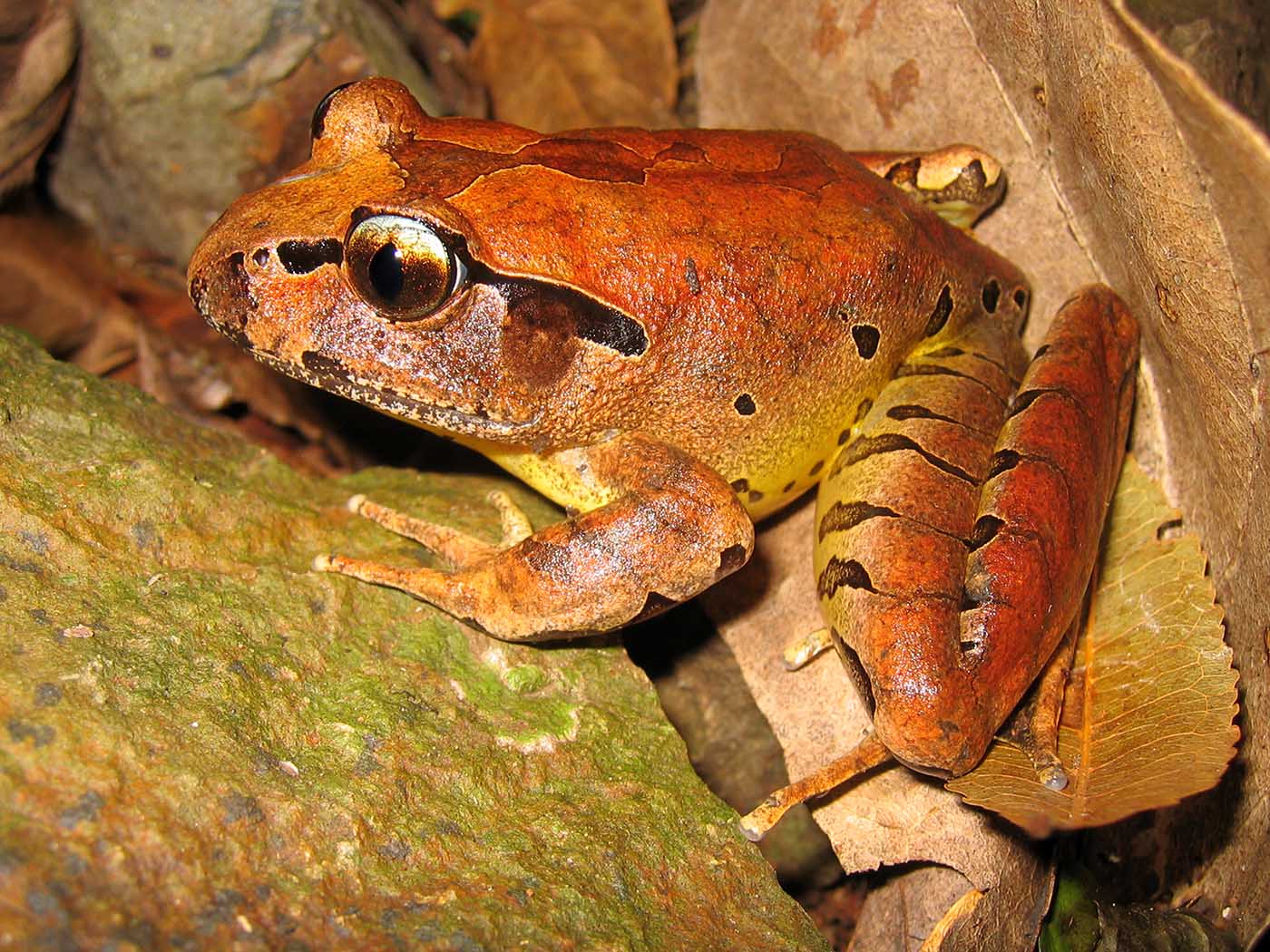
Fleay’s Barred Frogs (Mixophyes fleayi) juvenile (above) and adult (below), photographed in Queensland, Australia by SAVE THE FROGS! Founder Dr. Kerry Kriger.
Future cure for AIDS?
Skin secretions from at least three species of Australian frogs (the Green Treefrog Litoria caerulea, the Southern Orange-eyed Treefrog Litoria chloris, and the Green-Eyed Treefrog Litoria genimaculata) can completely inhibit HIV, the virus that causes AIDS.
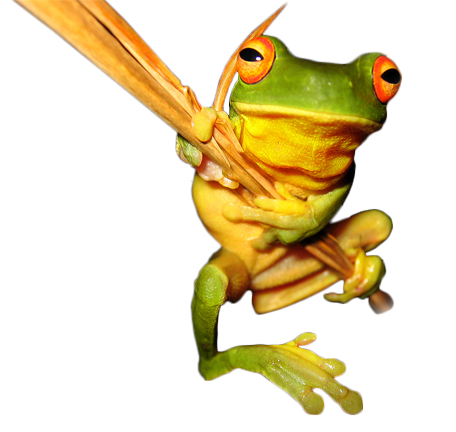
Southern Orange-Eyed Treefrog (Litoria chloris) in Queensland, Australia, photo by SAVE THE FROGS! Founder Dr. Kerry Kriger.
Do any amphibians have internal fertilization?
Most frogs and toads have external fertilization (eggs are laid outside of the female’s body and then fertilized by the male), but the Tailed Frog (Ascaphus truei), which lives in the US Pacific Northwest, has internal fertilization. Many salamanders have internal fertilization as well. Males drop a spermatophore (a gelatinous mass of sperm, more or less) in their favorite location. The lucky female then comes along and pick up this spermatophore with her cloaca to fertilize the eggs inside her body. Caecilians are the only group of amphibians in which all species utilize internal fertilization, and the males have a special organ called a phallodeum to deposit sperm directly into the female cloaca.
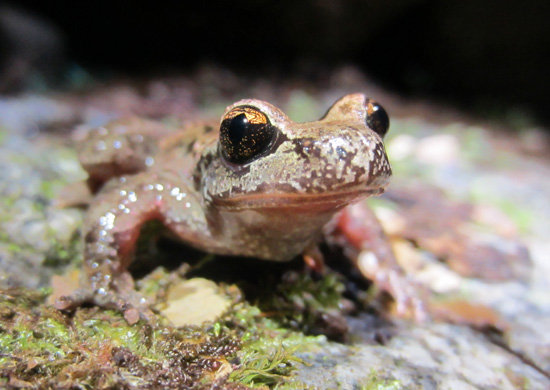
Tailed Frog (Ascaphus truei) north of Vanncouver, British Columbia, Canada.
Why do frogs have two names?
Frogs have both a common name and a scientific name, which is in Latin. Thus the African Clawed Frog is also known as Xenopus laevis. The scientific name consists of a frog’s genus followed by its species (this is called binomial nomenclature). Carl Linnaeus devised this system in the 18th century so that scientists could be certain they were always referring to the correct species. For instance, there is a ‘Green Treefrog’ in Europe, America and Australia, but they are all different species: Hyla arborea, Hyla cinerea and Litoria caerulea.
How To Write An Amphibian’s Name Correctly
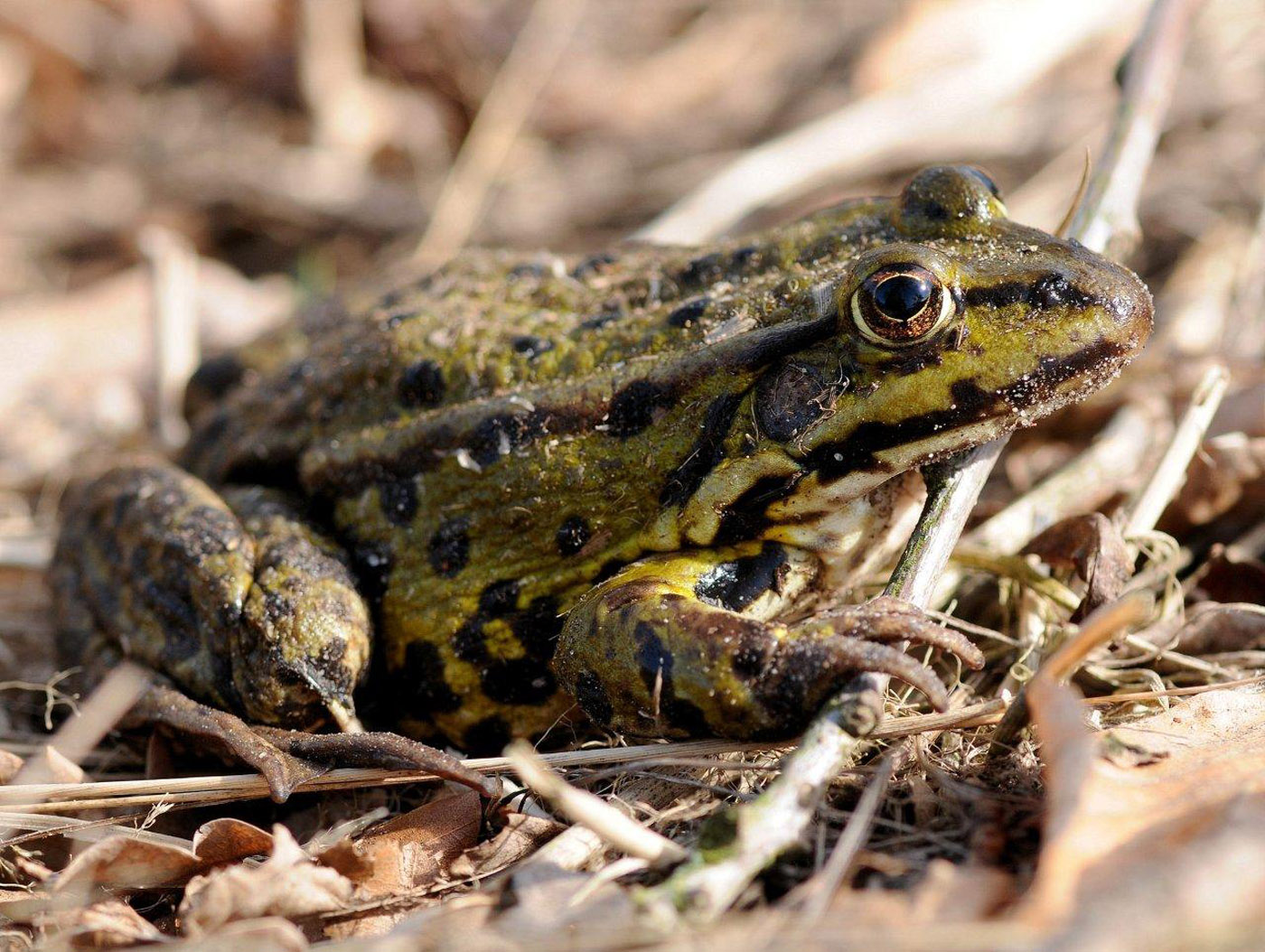
Photo of a Common Green Frog (Pelophylax ridibundus) by Bart van Oijen.
Long Jump
Australia’s Striped Rocket Frog (Litoria nasuta) can jump a distance equivalent to 55 times its body length! That would be like you jumping a football field! How do they do that? Their legs are twice as long as the rest of their body, and their leg muscles are 1/3 of their overall weight. These frogs are so cool we had to put a picture of one on our Frogs of Australia poster!
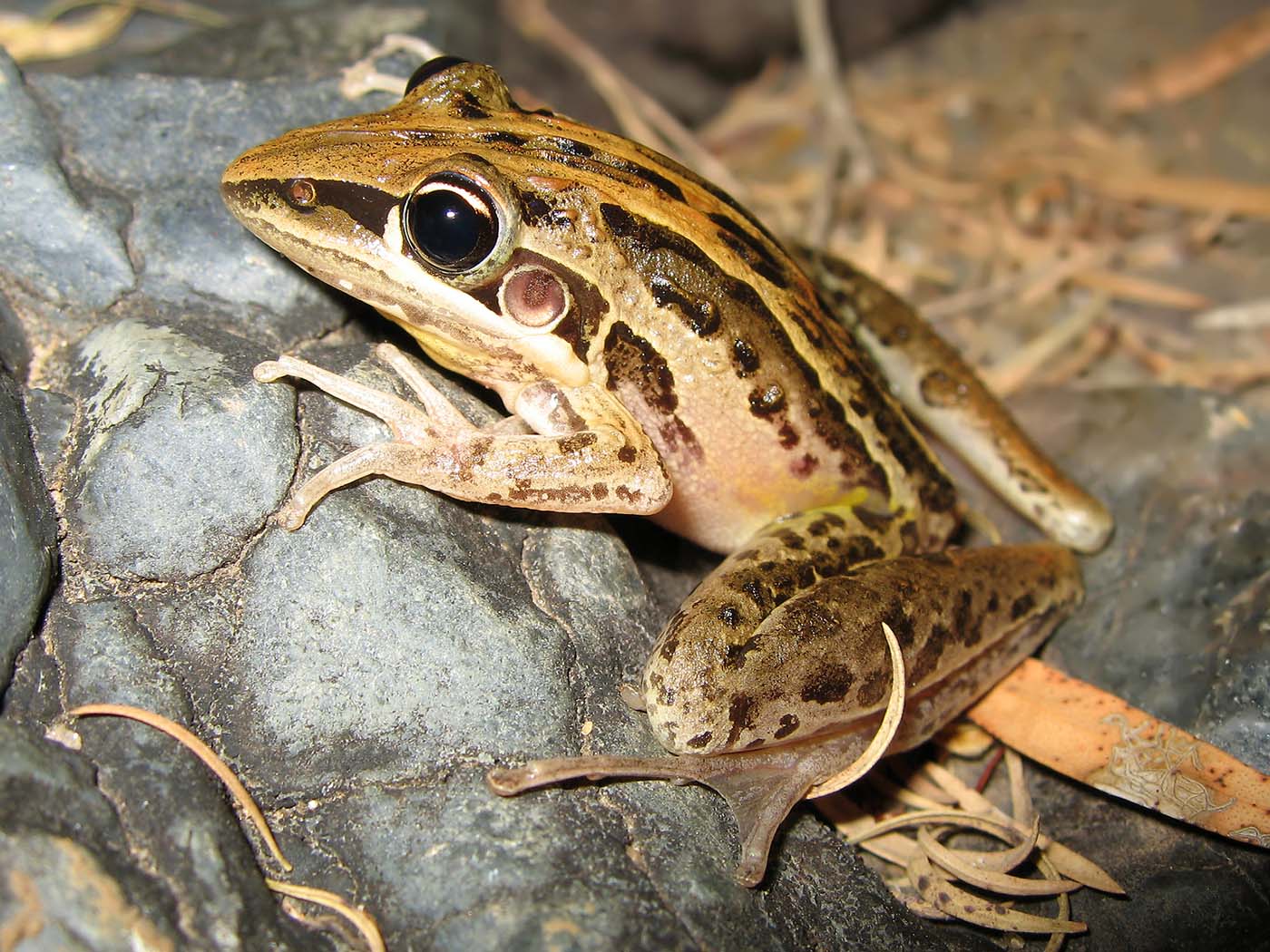
Striped Rocket Frog (Litoria nasuta) photo by Dr. Kerry Kriger
Living in dad’s mouth
Darwin’s frogs are characterized by a nasal prolongation and their unique brood system, named neomelia, in which males breed their offspring in their vocal pouch. The offspring of Rhinoderma darwinii leave the mouth as metamorphosed froglets. On the other hand, R. rufum holds their tadpoles only for two weeks, after which they are released into water in a relatively early tadpole stage. Unfortunately, Rhinoderma populations have declined and R. rufum is no longer found in the wild. Cool frog fact contributed by Johara Bourke.
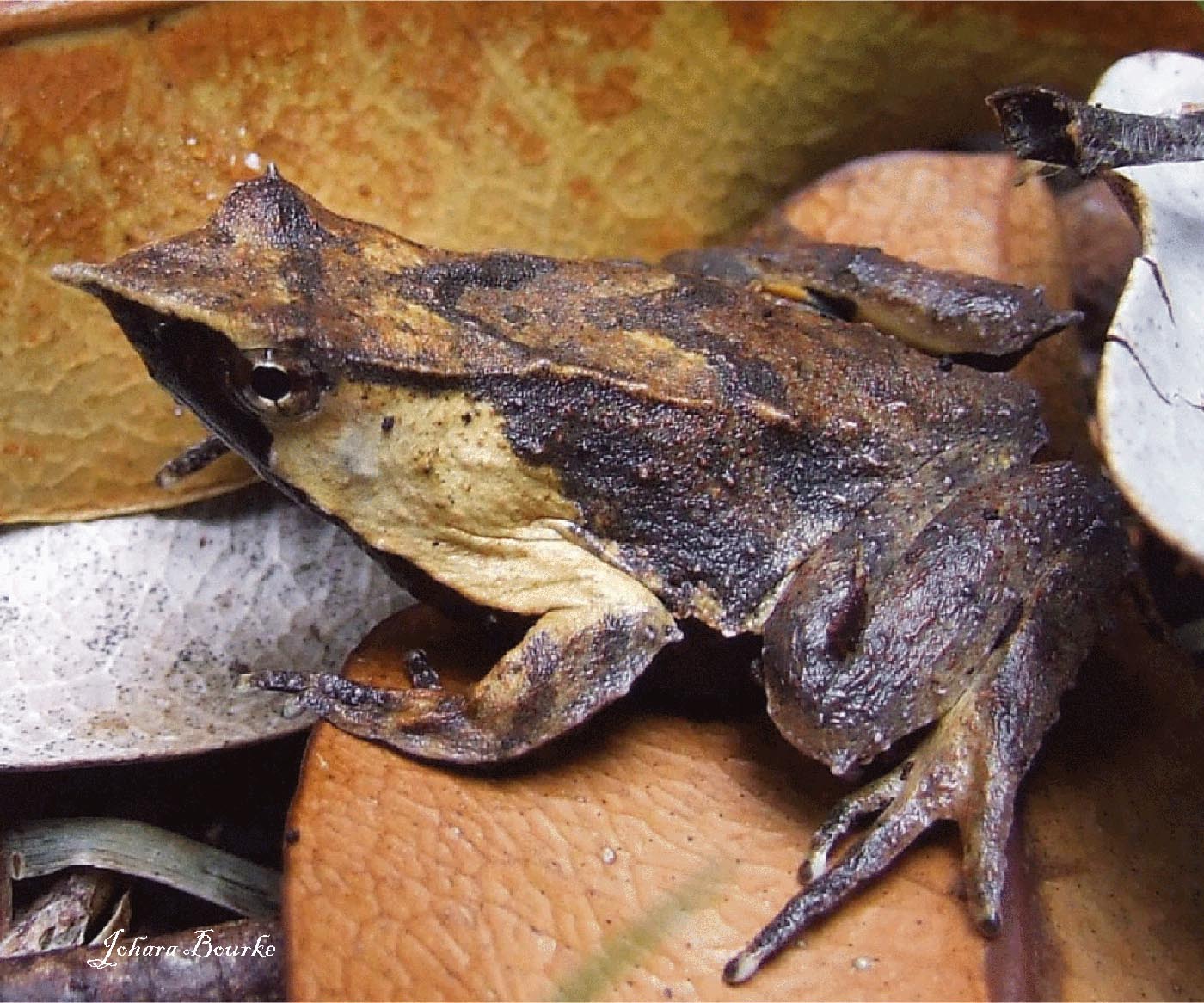
Cool frog fact and photo of Rhinoderma darwinii by Johara Bourke.
Are amphibians cold-blooded?
Technically, yes! Amphibians are ectotherms, which means they rely on the environment to regulate their own body heat.
However, the term “cold-blooded” has a negative connotation and sometimes amphibians are perceived to not have concern for other members of their own species. Yet it should be known that there are some incredibly dedicated “cold-blooded” mothers and fathers in the Wild World Of Frogs! In ephemeral marshes and ponds in Panama, the neo-tropical frog Leptodactylus insularum actively defends her eggs and tadpoles from predators. She will guard her recently hatched tadpoles. There are often 3,000 tadpoles in a clutch (a clutch is one cohort of offspring). She will stay with them until the tadpoles metamorphose into little froglets. What a good mom!
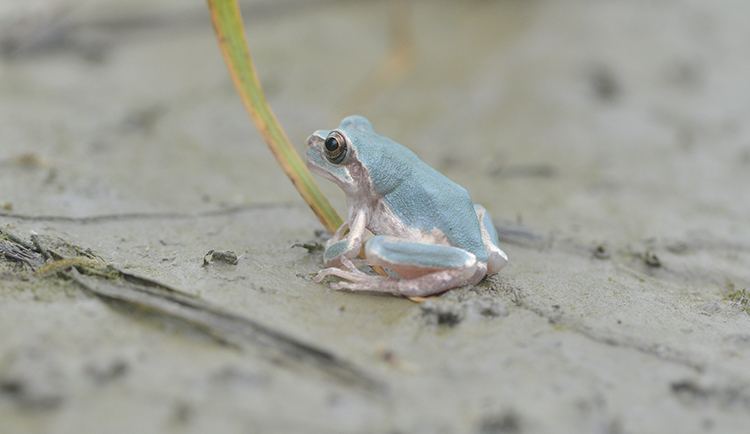
Photo of Dryophytes suweonensis from South Korea by Amael Borzee, 2017 SAVE THE FROGS! Photo Contest.
What’s A Caecilian?
Caecilians are amphibians that lack limbs. They look a bit like earthworms or snakes and can grow up to 1.5 m (5 ft) in length. As they are generally fossorial (meaning they live underground), they are the most under-studied order of amphibians.
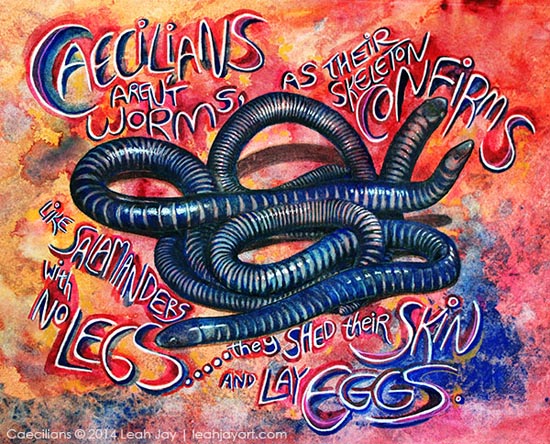
Caecilian art by Leah Jay, from her amazing book Amphibian Love.
Venomous frogs?
When people think of frogs with toxins, they think of the many species of poison dart frogs. But two new species of frogs, Corthythomantis greeningi and Aparasphenodon brunoi, were recently discovered to be venomous, not poisonous. Poisonous organisms have to be ingested or touched to transmit their toxins to predators, while venomous organisms inject or deliver their toxin (think snake fangs). These special frogs have small spikes on their skulls that they use to head butt other organisms, injecting them with their highly toxic venom.
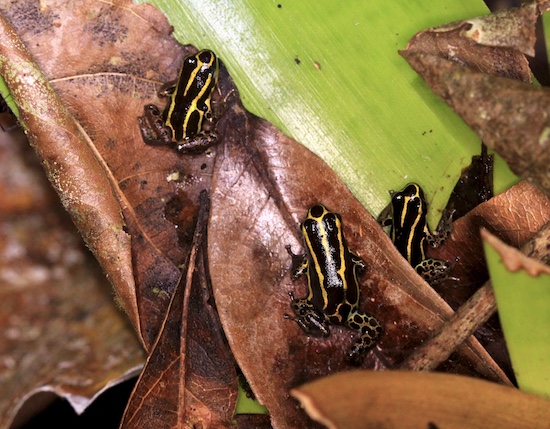
A group of poison dart frogs in Ecuador (poisonous…but not venomous)
Babies in backs?
The awesome reproduction of the Surinam toad (Pipa pipa). As they mate, a pair flips through the water, making 15 or so arcs. With each arc, the female releases up to 10 eggs. The male loosens his amplexic grip enough to allow the eggs to roll onto her back, fertilizing them at the same time. The eggs then sink into the spongy skin on the female’s back, which swells to embed each egg in a honeycomb-like chamber covered with a membrane. The toadlets develop for 12 to 20 weeks, then literally spring fully, flatly formed — if only 2 inches long — from Mom’s back.
While the offspring usually emerge under their own power, Mom can also flex, popping them straight up into the water. After the semi-explosive birth of about 100 toadlets, the ragged female sheds her skin.
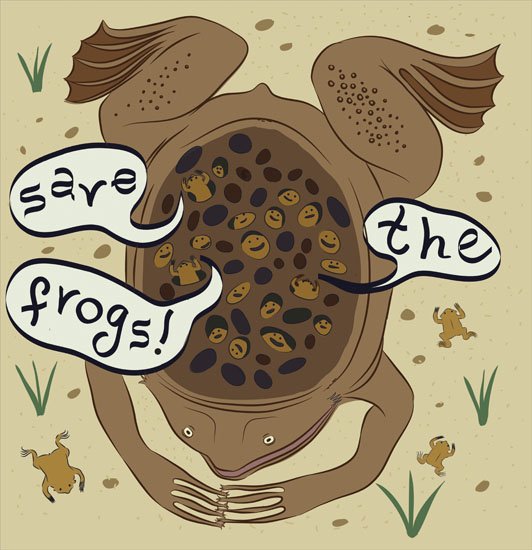
Pipa pipa artwork by Zoe Trautz, 2016 SAVE THE FROGS! Art Contest
Marsupial Frogs
Assa darlingtoni, commonly called the Marsupial Frog or the Pouched Frog, lives in the rainforests of eastern Australia, where it lays its eggs in moist leaf-litter. Both parents guard the nest of eggs, and when the froglets emerge, they crawl into the father’s two hip-pockets, where they hang out for several weeks. The adult in the picture is about the size of a thumbnail, imagine how small the froglets are! In the past, logging was a huge problem for these frogs, but luckily much of their remaining habitat falls within protected areas.
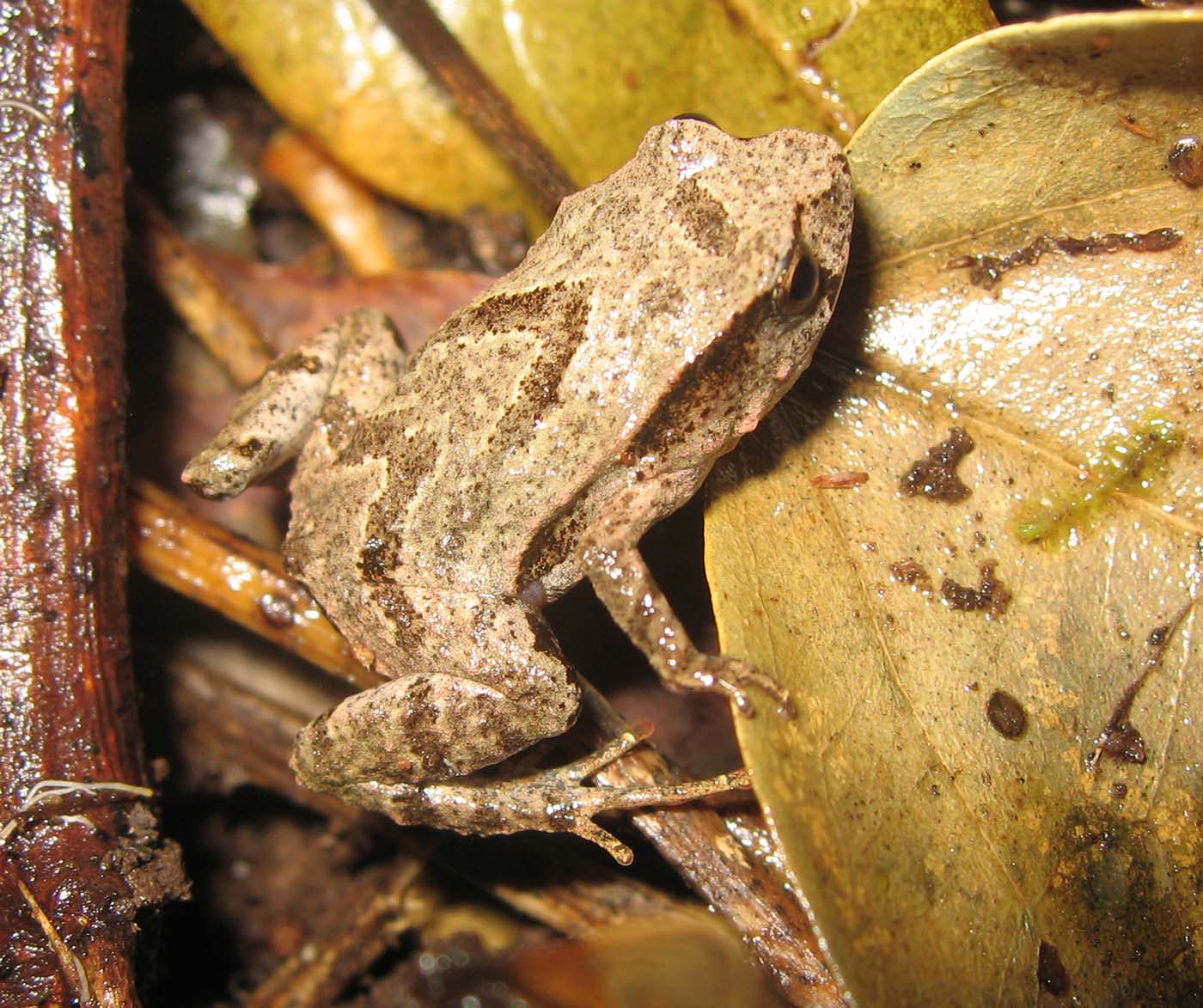
Marsupial Frog (Assa darlingtoni) from southeastern Queensland, Australia. Photo by SAVE THE FROGS! Founder Dr. Kerry Kriger
Gastric Brooders
The Northern & Southern Gastric Brooding frogs Rheobatrachus vitellinus and R. silus lived in eastern Australia. These amazing frogs were very unique – the female frogs actually swallowed the fertilized eggs, shut down their gastric juices and reared their young inside their stomachs! They therefore held great promise for advances in human medicine, as research on these frogs may have resulted in a cure for ulcers.
Unfortunately, the gastric-brooding frogs vanished within a few years of being discovered by scientists–the health of humans and frogs is clearly intertwined.
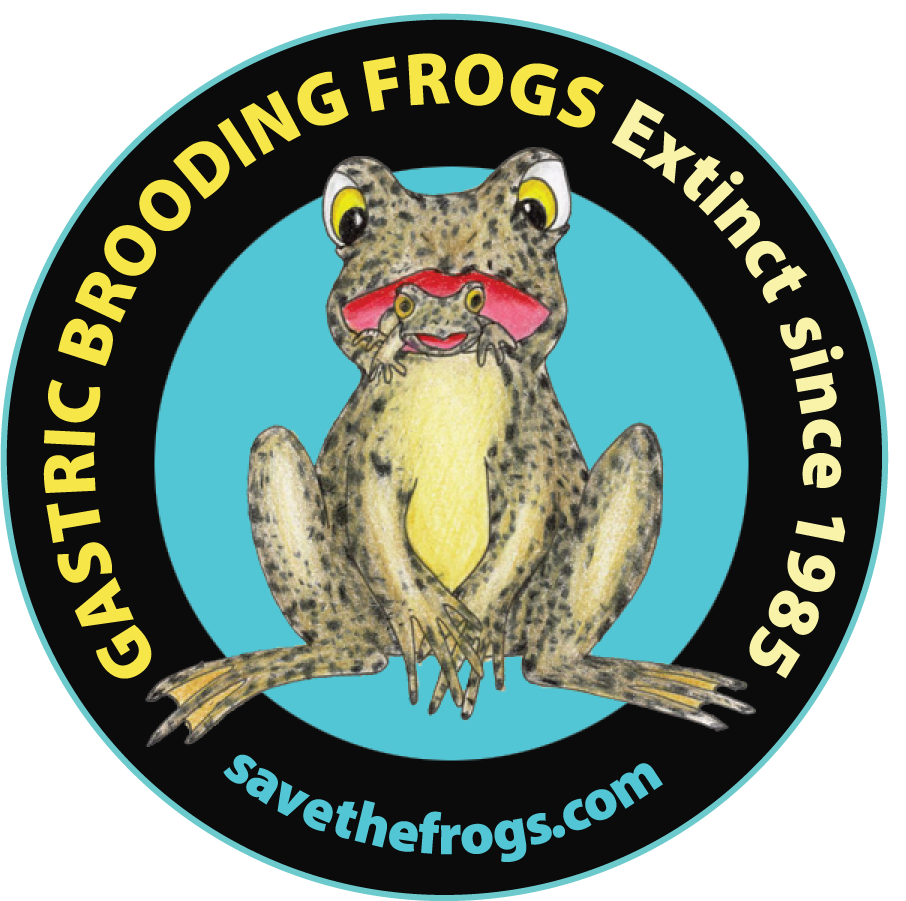
Gastric Brooding Frog art by Leah Klehn.
Cool Frog Poetry
Frog Poetry by Haley Summer Ford
Frogs in trees, Frogs in ponds.
Frogs on the ground, frogs all around.
Frogs!
Little precious creatures helping nature in so many ways.
Just want to sit back and enjoy warm sunny days.
SAVE THE FROGS!
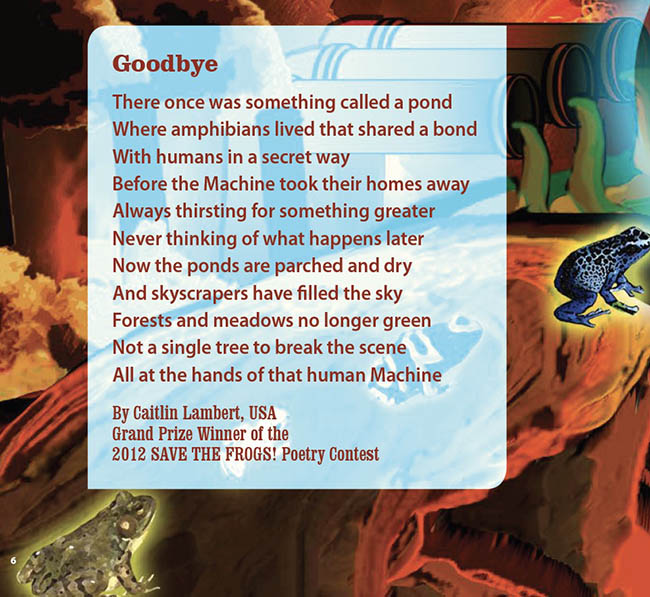
Grab your copy of The Little Book Of Frog Poetry, Volume 1 inside SAVE THE FROGS! Academy.
Continue Your Learning
You can learn a whole lot more about amphibians in SAVE THE FROGS! Academy and during SAVE THE FROGS! Office Hours…we hope to see you there!
SAVE THE FROGS! Academy is packed full of amphibious presentations, tutorials, flyers, PDF’s and more…